Choosing the right panel is the first serious decision when you install solar for a home, business, or utility project. The “best” technology depends on climate, roof space, budget, grid conditions, and maintenance access. A narrow roof may favor high-efficiency monocrystalline modules, while a hot desert site may require stronger temperature performance and careful ventilation.
The market is expanding quickly. According to IRENA’s Renewable Capacity Statistics 2024, solar added about 346 gigawatts globally in 2023, representing roughly 73% of new renewable capacity. The IEA’s Renewables 2024 report also identifies solar PV as the main driver of renewable growth through 2030. Jenny Chase, BloombergNEF’s solar analyst, has described solar as “the cheapest source of electricity in history.” Yet low prices do not remove technical risks. Shading, dust, hail, weak mounting systems, and misleading warranty terms can reduce real-world returns.
This guide compares ten panel types for global buyers, including monocrystalline, polycrystalline, thin-film, TOPCon, HJT, and bifacial modules. It considers efficiency, degradation, temperature behavior, installation complexity, and long-term value. IEC certification matters. So does the installer’s field experience. A laboratory rating cannot fully predict a dusty rooftop in Nairobi or a humid coastal project in Manila. This guide has limitations, too: product availability and prices change by country. There is no universal winner. Careful site assessment remains essential.
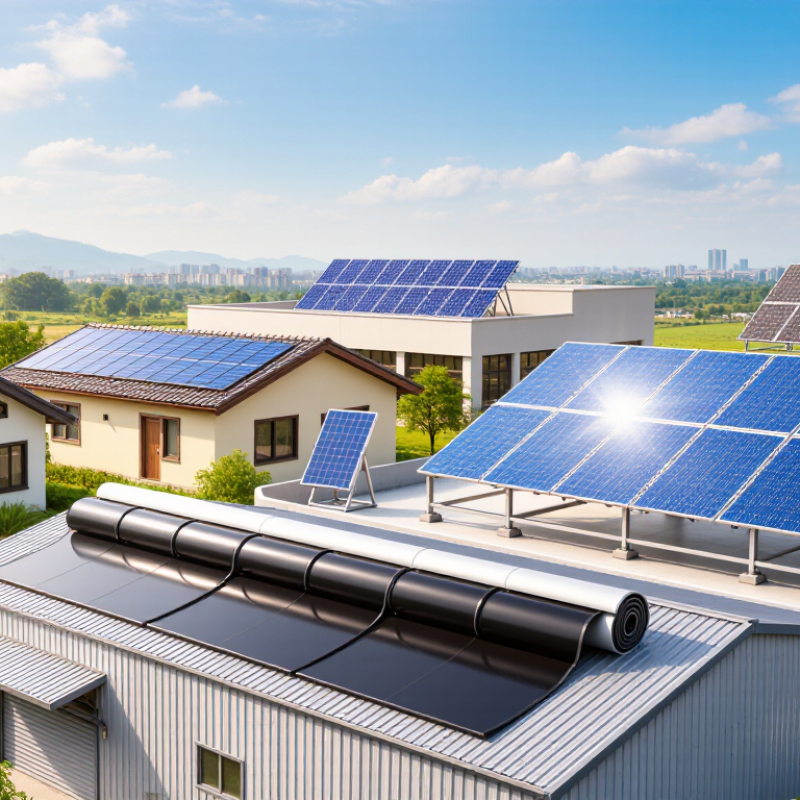
Monocrystalline panels use single-crystal silicon, offering strong efficiency in limited roof space. Polycrystalline panels use several silicon crystals and usually cost less, but produce slightly lower output.
Thin-film panels deposit semiconductor layers onto glass, metal, or flexible materials. They perform better in some low-light and high-temperature conditions.
Several advanced designs improve how cells collect or retain electrical charge. PERC cells add a rear passivation layer, reducing energy loss. TOPCon cells use a thin oxide and conductive layer to improve electron movement. Heterojunction panels combine crystalline silicon with thin amorphous silicon layers, supporting high efficiency and better temperature performance.
IBC panels place electrical contacts behind the cell, leaving more sunlight-absorbing space on the front. Bifacial panels generate power from both sides, especially above bright surfaces such as pale gravel. Tandem panels stack different light-absorbing materials, potentially capturing more of the solar spectrum. Flexible panels use lightweight substrates for curved roofs, vehicles, or temporary structures.
Real installation results depend on shade, ventilation, roof direction, dust, and wiring quality. A panel with impressive laboratory efficiency may underperform on a hot, poorly ventilated roof.
I have found that simple site measurements often matter more than a specification sheet. Durability data can also be incomplete. Buyers should compare tested degradation rates, fire classifications, warranties, and local replacement access before selecting a technology.
Top 10 Solar Panel Types to Install for Global Buyers
Ten Solar Panel Types Ranked by Performance, Cost, and Applications
1. IBC panels lead efficiency, often exceeding 24% in commercial modules, according to Fraunhofer’s Photovoltaics Report 2024. They suit space-limited rooftops, but usually cost more. 2. HJT panels deliver strong efficiency and low temperature losses. Their value improves in hot climates. 3. TOPCon panels commonly reach above 23% efficiency and offer a practical balance between output and price.
4. Bifacial panels can generate rear-side electricity on reflective surfaces. The gain depends heavily on ground design, not advertising claims. 5. PERC panels remain widely available and affordable, although newer designs are gradually replacing them. 6. CdTe thin-film modules perform steadily in heat and weak light, supporting large utility projects. 7. CIGS modules are lightweight and flexible, making them useful for curved roofs and mobile structures. Manufacturing scale remains uneven.
8. Polycrystalline panels cost less but generally produce lower power per square meter. 9. Amorphous silicon works in low-light applications, though its larger area requirement limits rooftop use. 10. Perovskite tandem panels show exceptional laboratory potential. NREL efficiency charts report research results above 30%, but long-term field reliability still needs stronger evidence.
IRENA’s Renewable Power Generation Costs in 2023 reported a 90% decline in solar photovoltaic electricity costs since 2010. However, module price is only one purchasing factor. Buyers should compare degradation, warranties, temperature coefficients, installation conditions, and local recycling rules. A ranking can mislead. The best panel may be the one that survives dust, heat, wind, and imperfect maintenance.
Comparison of typical commercial module efficiency and indicative module cost. Higher efficiency improves power output per square meter, while the cost index uses standard crystalline-silicon modules as a reference value of 100.
Values represent typical global market ranges and can vary by region, project scale, climate, installation method, and product specification.
Global solar buyers now choose among ten practical panel types: monocrystalline, polycrystalline, PERC, TOPCon, heterojunction, bifacial, thin-film, CIGS, cadmium telluride, and flexible modules. IEA PVPS Trends 2024 reported more than 440 GW of new photovoltaic capacity in 2023. That scale hides a key issue: the best panel depends on regional conditions, not only laboratory efficiency.
Hot regions need strong temperature performance. NREL research commonly places crystalline silicon temperature coefficients near −0.3% to −0.5% per degree Celsius. TOPCon and heterojunction modules may suit desert roofs, but ventilation and light-colored mounting surfaces still matter. Dusty areas require accessible cleaning routes. Bifacial panels can gain energy from bright sand or reflective roofs, although uneven ground can reduce the benefit. That detail is often overlooked.
Cloudy northern climates favor high low-light response, careful tilt angles, and reliable snow-shedding design. Thin-film options can perform steadily under diffuse light, while flexible modules help on curved or lightweight structures. Coastal buyers should request corrosion-resistant frames and fasteners. High-wind zones need certified structural calculations, not guesses. Snow-load limits must match local building codes.
Installation quality remains decisive. The Global Market Outlook for Solar Power 2024–2028 identifies continued rapid deployment, but field performance still varies with shading, wiring, and inverter sizing. I would not treat a higher nameplate rating as automatic superiority. Roof orientation, humidity, maintenance access, and local installer experience can change the result. Mistakes happen, especially when imported specifications ignore the actual climate.
For global buyers, panel choice should follow climate, roof space, and service access. Efficiency matters when roof area is limited. Monocrystalline panels often reach about 20–23% efficiency and suit compact rooftops. Polycrystalline panels usually cost less, but need more space for similar output. TOPCon and HJT designs can deliver higher efficiency and lower degradation. Their stronger performance may justify a higher purchase price. Bifacial panels produce energy from rear-side light, especially above bright roofs or pale ground. Thin-film options, including CdTe and CIGS, perform steadily in heat and weak light. Flexible panels are lightweight, yet their shorter service life can limit long-term value.
Durability depends on more than the cell type. Check wind-load ratings, hail resistance, frame quality, and junction-box protection. A well-built panel commonly serves for 25 to 30 years, though output gradually declines. Salt air, dust, humidity, and repeated heat cycles can accelerate wear. Thin-film panels may tolerate high temperatures well, while flexible products can suffer from surface abrasion or difficult repairs. Maintenance is usually simple: inspect cables, clear heavy dirt, and check for cracks after severe weather. Still, cleaning needs vary. Dry, dusty sites may require more frequent washing than rainy regions. I have seen buyers overestimate efficiency and underestimate access costs.
Tips: Request temperature coefficients, degradation guarantees, test certificates, and local installation references. Compare annual energy yield, not only the efficiency percentage. Leave safe access for inspections. A cheaper panel may become expensive when replacement labor is difficult or spare parts travel across borders.
Choosing among the top 10 solar panel types starts with the site, not the product label. A narrow roof may favor high-efficiency monocrystalline, TOPCon, HJT, or back-contact panels. A large, budget-sensitive roof may suit polycrystalline or thin-film technology. Bifacial panels can perform well above bright surfaces, but they need suitable spacing and reflected light.
Measure usable roof area, shade movement, roof direction, and local weather. Hot climates require careful temperature-coefficient checks. Snowy or coastal areas need strong mounting systems and corrosion-resistant materials. Flexible panels can help on curved surfaces, though their service life and repair options deserve closer review. Shingled designs may reduce visible gaps, but installation quality still controls actual output.
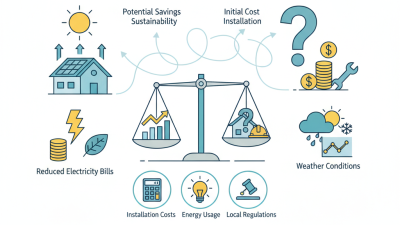
Compare lifetime energy, not only the purchase price. Request independent test data, degradation rates, fire classifications, and certification for the installation region. Check whether the panel works with the inverter, wiring, and roof structure. Ask installers to explain production estimates using local sunlight data. One detail is often missed: nearby trees can change winter output dramatically. My first recommendation is not always the best one. A premium panel may waste money on a shaded roof, while a cheaper option may underperform in extreme heat. Leave room for doubt, then verify the numbers.